
We use cookies on this website. Cookies help us deliver the best experience on our website. More about cookies
-
- Education
- Education
- Find programmes and courses
- Applications and admissions
- Tuition fees
- Scholarships
- Exchange studies at Malmö University
- Study Guidance
-
- After admission
- After admission
- Moving to Malmö
- Pre-orientation
-
- About studies at Malmö University
- Why choose Malmö University
- Understanding university studies
- Connect with our students
On the page -
- Research
- Research
- Find researchers and research
-
- Doctoral studies
- Doctoral studies
- Doctoral courses
-
- Doctoral schools
- Doctoral schools
- Adaptation of urban space through sustainable regeneration
- Culturally Empowering Education through Language and Literature
- Doctoral school: DACHE
- Education, Learning and Globalisation
- Finding ways in a time of great future challenges (FinnFram)
- Swedish National Graduate School in Science and Technology Education Research
- Learning in Multicultural Societal Contexts
- Pedagogy and Vocational Skills
- Relevancing Mathematics and Science Education (RelMaS)
- Sustainable Movement Education
- The National Research School for Professionals in Social Services
- Research subjects
-
- Research centres
- Research centres
- Biofilms Research Centre for Biointerfaces
-
- Citizen Health
- Citizen Health
- Kids in Action
- Imagining and Co-Creating Futures
- Institute for Urban Research
- Malmö Institute for Migration Studies
- Literacy and Inclusive Teaching
- Centre for Work Life Studies
- Sustainable Digitalisation Research Centre
- Centre for Sexology and Sexuality Studies
-
- Research publications
- Search for research publications in Diva
- Malmö University Press
-
- Research in focus
- Research in focus
- Focus: In the classroom
- Focus: The Election 2026
- Focus: A future with AI
- Focus: Climate and society
- Focus: Peace, democracy and human rights
- Focus: The mouth
- Focus: Migration
- Focus: Elite Sport, Football and Supporter Culture
- Focus: Perspectives on Malmö
- Focus: Loneliness
- Research events
- Participate in a research study
On the page -
- Collaboration & Innovation
-
- Levels of collaboration
-
- Local collaboration
- Muvah
- Co-Create Malmö
- Regional collaboration
- National collaboration
-
- International collaboration
- UNIC
- Innovation
- Collaboration with students
- Collaborate with researchers
- Culture collaboration
- Support Malmö University
On the page -
- About us
- About us
-
- Meet Malmö University
- The history of the University
- Malmö University in numbers
- Sustainability
-
- Management and organisation
-
- Faculty of Culture and Society
- Department of Global Political Studies
- School of Arts and Communication
- Department of Urban Studies
-
- Faculty of Education and Society
- Department of Childhood, Education and Society
- Department of Sport Sciences
- Department of Culture, Languages and Media
- Department of Natural Science, Mathematics and Society
- Department of Society, Culture and Identity
- Department of School Development and Leadership
- The Centre for Teaching and Learning (CAKL)
- Knowledge Centre for Educational Health in Schools (PHIS)
-
- Faculty of Technology and Society
- Department of Computer Science and Media Technology
- Department of Materials Science and Applied Mathematics
- Faculty of Odontology
- Management and decision-making paths
- Malmö University's strategy 2030
-
- Quality assurance work at the University
- Widened recruitment and participation
- University Dental Clinic
-
- Malmö Academic Choir and Orchestra
- Student work – video pieces
On the page -
- Contact
- Contact
- We help you with your questions
- Find your way around Malmö University
-
- News and press
- News and press
-
- Graphic manual
- Graphic manual
- Logo
- Colours
- Typography
- Visual language
- Film and live broadcasts
- Visit Malmö University
- Merchandise
- Supplier information and invoice management
- Whistleblowing
On the page
Presentation
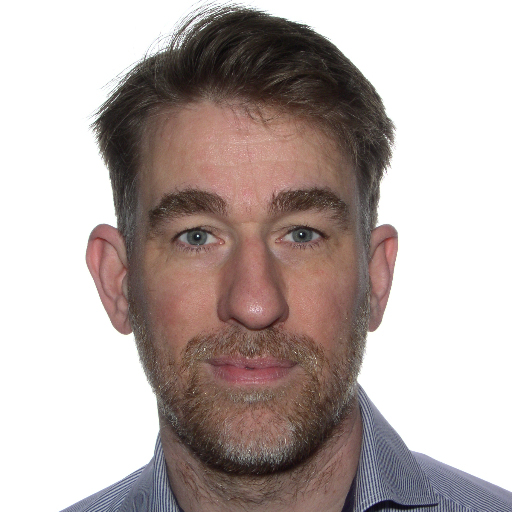
I have been a Senior Lecturer at Malmö University since August 2023. Prior to that, I held a similar position in Computer Science at Kristianstad University for just over ten years. My educational background includes an MSc in Electrical Engineering and a degree in Business and Economics from Lund University. After completing my university studies, I spent more than ten years working at ABB and Ericsson, primarily focusing on business process improvement using methodologies such as Lean and Six Sigma. I subsequently earned my PhD in Logistics at the Faculty of Engineering (LTH), Lund University.
An important part of my work at ABB and Ericsson involved analyzing large datasets to identify relationships, develop models, and make predictions. For example, this included developing models to predict the time required to install a mobile telecommunications base station or the production cost of a distribution transformer based on a given technical specification. These experiences provided me with a strong practical foundation in using data and quantitative methods to understand complex operations and improve decision-making.
During my doctoral studies at LTH, my research primarily focused on investigating how emerging technologies for identifying and tracking goods in supply chains affect the overall efficiency and resilience of logistics systems. To address these questions, I mainly used discrete-event simulation and analysis of simulation results. One of my early case studies explored how smart sensors in recycling containers could be used to optimize collection routes and emptying operations. This research subsequently led to further studies that also incorporated behavioral aspects of recycling.
A common thread throughout my professional career has been the use of data, models, and analytical methods to understand and improve different types of systems and operations. The combination of my technical and business education, practical experience, and academic research has shaped an approach in which technical solutions are considered in relation to organizational needs and real-world constraints. This perspective continues to influence my work today, both in teaching and research at Malmö University.
In my teaching, I cover subjects such as statistics, data analysis, and decision support, with an emphasis on connecting theoretical methods to practical problems and real-world decision-making. My previous professional experience is particularly valuable in this regard, as it allows me to demonstrate how these methods are applied in practice, their limitations, and the challenges that arise when implementing them in real-world settings.
This connection is also evident in my current research. Among other topics, I investigate how sensor data, simulation, and machine learning can be used to analyze and predict the behavior of complex systems, particularly in water and stormwater management. This work combines data-driven approaches with traditional system modeling to provide better decision support.
My background has also fostered a strong interest in how rapid advances in artificial intelligence and machine learning can be translated into practical value. For me, the challenge is not only to develop models with strong predictive performance, but also to understand their reliability and limitations, and how their outputs can support well-informed decisions. This perspective is central to both my research and my involvement in developing new courses in data-driven decision-making and AI.