Sustainable Digitalisation Research Centre
Our vision is to be the leading research environment for interdisciplinary research on sustainable digitalisation, e.g. by contributing knowledge and methods on how to realise digitalisation that is sustainable from a social, economic, ecological as well as technological perspective.
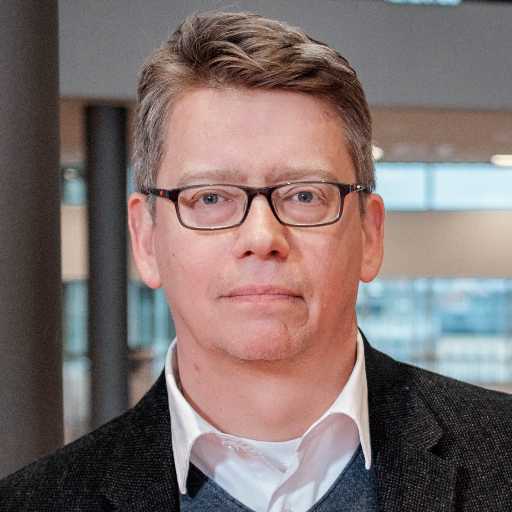
Paul Davidsson, Director


Two overarching research areas
Sustainability of digitalisation

Sustainability of digitalisation
How can we harness the opportunities offered by digitalisation whilst taking into account key social factors such as trust and inclusion, and technological factors such as resource efficiency and reliability?

Researchers, publications and projects
We are always interested in new collaborations with academia and industry. Please contact our researchers if you have any questions.
-
2027 | Conference paper
Synchronized RGB-D Inpainting for Privacy-Aware 3D Scene Graph Construction
Gawtam Chithra Ramesh, Püren Güler, Hiba Alqaysi, Marcus Valtonen Örnhag, Héctor Caltenco, Erdal Akin, Kayode Sakariyah Adewole
-
2027 | Conference paper
Triggering Sustainable Behavior Through Digital Nudging: A Case Study in the Energy Consumption Sector
Mikaela O’Bryan, Jose Font, Jana Knezevic, David Krtolica
-
2027 | Conference paper
Interpersonal Violence and Abuse in Smart Homes: A Systematic Mapping Study
Fazeleh Dehghani Ashkezari, Martin Höst, Kayode Sakariyah Adewole, Klara Svalin, Andreas Jacobsson
-
2027 | Conference paper
Data-Driven Parameter Estimation of Gray-Box Building Thermal Models
Ali Soleimani, Paul Davidsson, Romina Spalazzese, Reza Malekian
-
2026 | Conference paper
Enhancing Immigrant Integration through Human-AI Adaptive Learning and Digital Skills Development
Azadeh Sarkheyli, Arezoo Sarkheyli-Hägele
-
2026 | Conference paper
Adaptive Streaming Anomaly Detection for Indoor CO 2 and Temperature Monitoring
Geng Yuan, Kayode Sakariyah Adewole, Nong Si
-
2026 | Article in journal
Evaluation of Panel and Site Selection for a Solar Power Plant Using Geographic Information Systems and an Integrated Multi-Criteria Decision-Making Framework
Katre Akay, Yaren Doğan, Bengisu Topcu, Akın Özdemir, Mehmet Erdem, Selahattin Kosunalp, Vedat Tumen, Erdal Akin
-
2026 | Article in journal
A topology-aware visual fusion framework for patient-level emphysema classification from chest CT images
Yesim Eroglu, Muhammed Yildirim, Oguzhan Katar, Esra Yildirim, Mucahit Karaduman, Vedat Tumen, Muhammed Talo, Erdal Akin, Ozal Yildirim, U. Rajendra Acharya
-
2026 | Article in journal
The Invisible Watermark: A Pilot Study on the Verifiability Gap in AI Text Watermarking
Selma Bulut, Adem Korkmaz, Selahattin Kosunalp, Vedat Tümen, Erdal Akin
-
2026 | Article in journal
Financial Resilience Under a Major Gold-Price Regime Shift: A Benchmark-Based Assessment of Machine Learning, Deep Learning, and Econometric Models
Ayşe Alev Aldemir, Adem Korkmaz, Erdal Akin
Research themes
The research is organised into five themes that correspond to key areas of digitalisation.
Health and well-being
The use of digital technologies to support all phases of healthcare, including preventive care and well-being. It can empower people to proactively engage with their health and manage their recovery from illness, but also to share data to improve outcomes and reduce inequalities.
Home and everyday living
This includes the use of digital technologies and the impact of digitalisation in everyday life. Homes are of particular interest as they are increasingly filled with internet-connected devices such as cameras, microphones and other sensors.
Education and lifelong learning
The use of digital tools to facilitate lifelong learning in different contexts, including both professional and informal learning in different sectors of society.
Transport and mobility
To move people and goods efficiently and safely. By using IoT and other digital technologies to plan transport, guide travellers and support autonomous actions, such as self-driving vehicles, we can achieve higher efficiency, improved traveller experience and comfort, reduced environmental impact and increased safety.

Energy and buildings
Includes digital solutions to improve the production, distribution and consumption of energy, as well as to increase the safety and efficiency of buildings.
Seminars Autumn 2025
- “AI and Public Sector Organisations” by Frans af Malmborg, Lecturer, Faculty of Health and Society
October 20th 15:30-16:30
NIA0611, Niagara, Floor 6. - “Improving Quality Using AI: An Intelligent Defect Detection for Manufacturing" by Romina Spalazzese, Associate Professor, Faculty of Technology and Society
November 3, 15:30-16:30
NIA0510, Niagara, Floor 5A - “The Digital Backlash” by Carolina Martinez, Associate Professor/Senior lecturer, Faculty of Education and Society
November 17, 15:30-16.30
NIA0611, Niagara, Floor 6. - “Digitalisation and democracy” by Tobias Olsson, Professor, Faculty of Education and Society
December 1, 15:30-16:30
NIA0411, Niagara, Floor 4A
Advisory board
-
Johan Eker – Chair
Senior Researcher; Professor,
Ericsson; Lund Institute of Technology
-
Mattias Esbjörnsson
Senior Research Project Manager
RISE – Research Institutes of Sweden
-
Anna Stankovski Clark
Head of Digitalisation
Trivector Traffic
-
Maria Stellinger Ernblad
Director of Digitalisation
City of Helsingborg
-
Tobias Olsson
Dean, Faculty of Learning and Society
Malmö University
Management group
-

Paul Davidsson – Professor
paul.davidsson@mau.se
-

Kristofer Hansson – Senior lecturer/Assistant head of dep.
kristofer.hansson@mau.se
-

Carl Magnus Olsson – Associate Professor
carl.magnus.olsson@mau.se
-

Romina Spalazzese – Associate Professor/Program director
romina.spalazzese@mau.se
-

Carolina Martinez – Associate Professor/Senior lecturer
carolina.martinez@mau.se
-

Andreas Jacobsson – Professor/Deputy vice-chancellor
prorektor@mau.se
-

Ulrika Sjöberg – Professor
ulrika.sjoberg@mau.se
-

Bahtijar Vogel – Head of department/Senior lecturer/Associate Professor
bahtijar.vogel@mau.se
-

Lisa Björklund Boistrup – Professor
lisa.bjorklund.boistrup@mau.se
-

Dario Salvi – Associate Professor/Senior lecturer
dario.salvi@mau.se
-

Elisabeth Mangrio – Associate Professor/Senior lecturer
elisabeth.mangrio@mau.se
-

Jan Persson – Senior lecturer/Associate Professor
jan.a.persson@mau.se
-

Per Linde – Senior lecturer
per.linde@mau.se
-

Reza Malekian – Professor
reza.malekian@mau.se